Daily operations
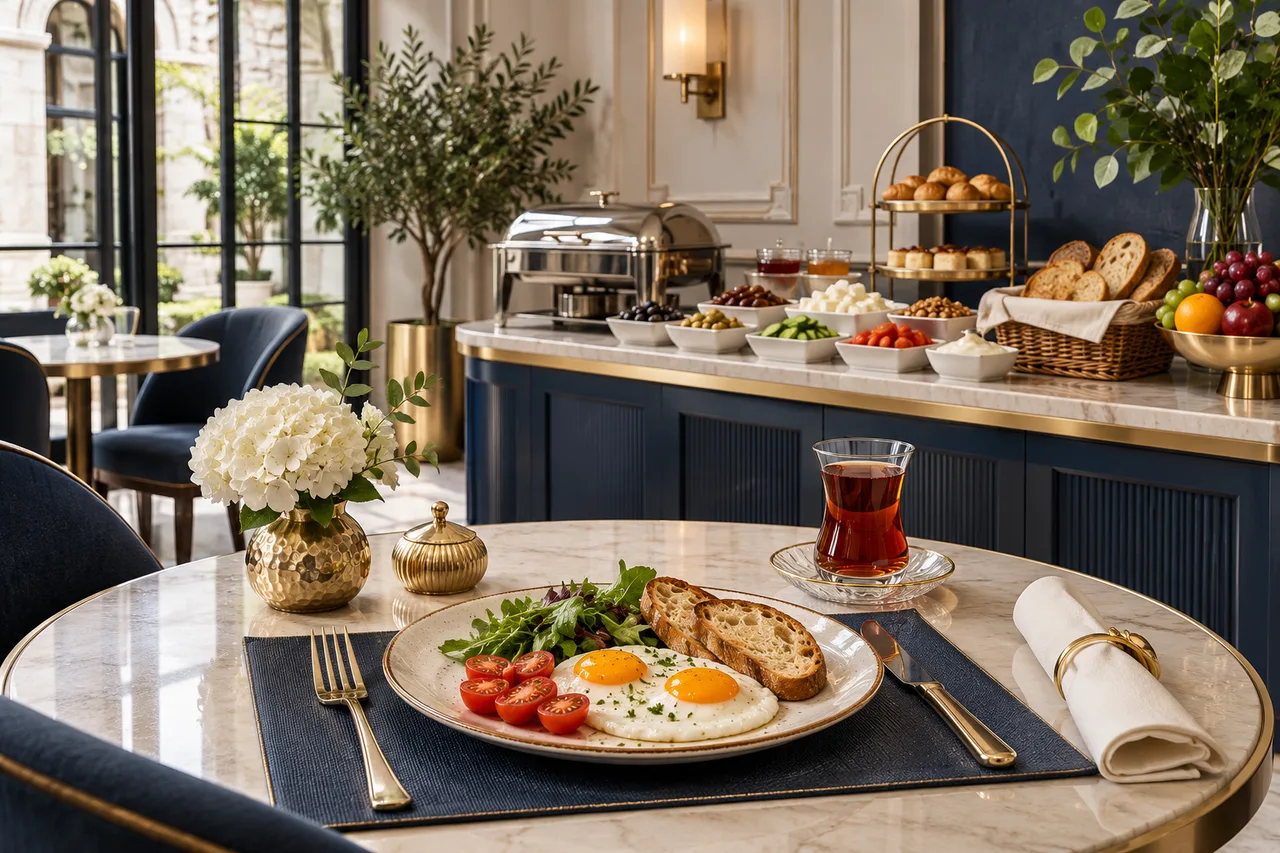
Hotel breakfast: choose buffet or plated service around peak capacity
Compare buffet, plated and made-to-order breakfast for a small hotel using staffing, service promises and a hypothetical all-in AZN cost calculation.
The short answer
Choose the breakfast model your team can deliver during the busiest arrival period. Define the menu and included choices, compare ingredients, paid preparation and service hours, washing, equipment and overhead on the same basis, then pilot the options. A lower food bill alone does not prove that plated service is cheaper or that a buffet is faster.
A small Azerbaijan hotel’s breakfast model should match its kitchen, dining room and team. Start with the advertised meal, then compare buffet, plated and made-to-order service under the same conditions.
Hilton Arlington’s Dan & Brad’s lists both buffet and à la carte breakfast. This shows that formats can coexist; it does not establish which is cheaper or suitable for a small Azerbaijan hotel.
This original operating recommendation addresses service design and spending, rather than guest counting or food-waste measurement.
Define exactly what breakfast includes
Write a short service specification: hours, core dishes, drinks, hot choices, portion policy and any separately charged additions. Distinguish a prepared set plate from an item cooked after ordering. They create different kitchen workloads even if both arrive at the table.
For example, propose bread, cheese, vegetables, a hot egg dish and tea, then specify whether guests choose the egg preparation and may request more. This is an illustrative menu, not a claim about local preferences. Only offer dietary adjustments the kitchen can reliably explain and deliver.
Preserve confirmed inclusions: a trial must not quietly replace a promised buffet with a limited plate. Update future booking descriptions and reception’s explanation. State the final ordering time if it differs from closing time.
Test the busiest interval, not the daily average
Sketch the journey from arrival to a cleared table. Assign responsibility for greeting, taking orders, cooking, replenishment, drinks, clearing and washing. In the staff shift roster, show preparation and closing work as well as visible service hours.
A buffet needs someone watching availability and keeping the service area ready. A plated breakfast needs an order path and a reliable handoff to the table. Made-to-order cooking also needs enough cooking capacity for simultaneous requests. A hybrid might offer cold items from a small buffet and one hot choice by order.
Rehearse eight guests requesting hot dishes within ten minutes. Time your menu, equipment and staff. Record the longest wait, unfinished orders and unattended tasks. Eight is a test scenario, not a forecast or staffing rule.
Avoid assigning the same colleague to reception departures and breakfast delivery at the same moment. Identify who covers absence or a delayed dish. Set an internal wait-time target before the trial, based on what your hotel can promise honestly.
Compare the whole morning’s costs
The following figures are entirely hypothetical, exclude tax consistently and cover 24 breakfasts with comparable core food and drink inclusions. They are not market prices, payroll advice or a guest selling price. Labour means combined paid staff hours across preparation, service and closing.
| Illustrative morning cost | Buffet, AZN | Plated, AZN |
|---|---|---|
| Ingredients and drinks | 144 | 120 |
| Labour at assumed 9 AZN/hour | 6 × 9 = 54 | 8 × 9 = 72 |
| Energy, washing and consumables | 18 | 16 |
| Equipment use and maintenance allocation | 12 | 6 |
| Allocated shared overhead | 24 | 24 |
| Total planning cost | 252 | 238 |
Cost per breakfast is 252 ÷ 24 = 10.50 AZN for the buffet and 238 ÷ 24 ≈ 9.92 AZN for plated service. The apparent advantage is 14 AZN per morning. Two additional paid hours would add 2 × 9 = 18 AZN, taking the plated total to 256 AZN and reversing the comparison.
Replace every assumption with your own quotations and observed hours. Include the owner’s working time at a stated planning value. Avoid counting utilities or labour twice through overhead. Add any omitted property-specific costs before describing the comparison as complete; an equipment purchase also needs a separate cash budget.
Allocated costs are not automatically avoidable cash expenditure. A shorter shift does not save payroll unless the staffing arrangement actually changes. Reconcile breakfast allocations with your wider cost per occupied room calculation, keeping each expense counted once.
Run a controlled pilot
Choose comparable mornings and keep the menu promise stable. Separate unusually busy periods when reviewing results. Apply the hotel’s food-handling procedures to every format.
- Record the menu, inclusions, staffing and equipment for each option.
- Agree the trial dates, responsible manager and acceptable waiting time.
- Observe peak orders, table readiness and unfinished staff tasks.
- Record actual hours and all cost categories on the same basis.
- Collect brief guest and team comments about choice and convenience.
- Decide whether to retain, adjust or stop the model before expanding it.
Frequently asked questions
Is plated breakfast always cheaper?
No. Ingredient savings may be outweighed by cooking, delivery and washing time. Compare total costs and service performance.
Must a small hotel choose only one format?
No. A limited buffet with an ordered hot dish is a possible pilot, provided both parts have clear responsibilities and costs.
What if the cheaper option creates long waits?
Adjust the menu or staffing and recalculate. Do not approve a model that repeatedly fails the breakfast promise merely because its initial estimate is lower.
These guides are published by BirOtel. General methods, illustrative examples and current product capabilities are identified separately. Sources appear beside the relevant explanations.
[email protected]Explore these workflows for your own hotel
Use your room inventory and daily tasks to assess whether BirOtel fits your hotel in a live demo.