
Hotel operations
How to separate torn, worn or stained hotel linen
Take torn, thinning or stained hotel linen out of use, label and count it, and reconcile returns, repairs and write-offs after inspection.
The short answer
Remove torn, thinned or stained linen from use and reduce the ready count immediately. Keep clean rejects separate from dirty laundry. Record the visible defect, item, size and quantity, and list the pieces separately as pending for the supervisor or laundry lead. Add pieces back to the ready count after an approved return to use, or record the approved write-off.
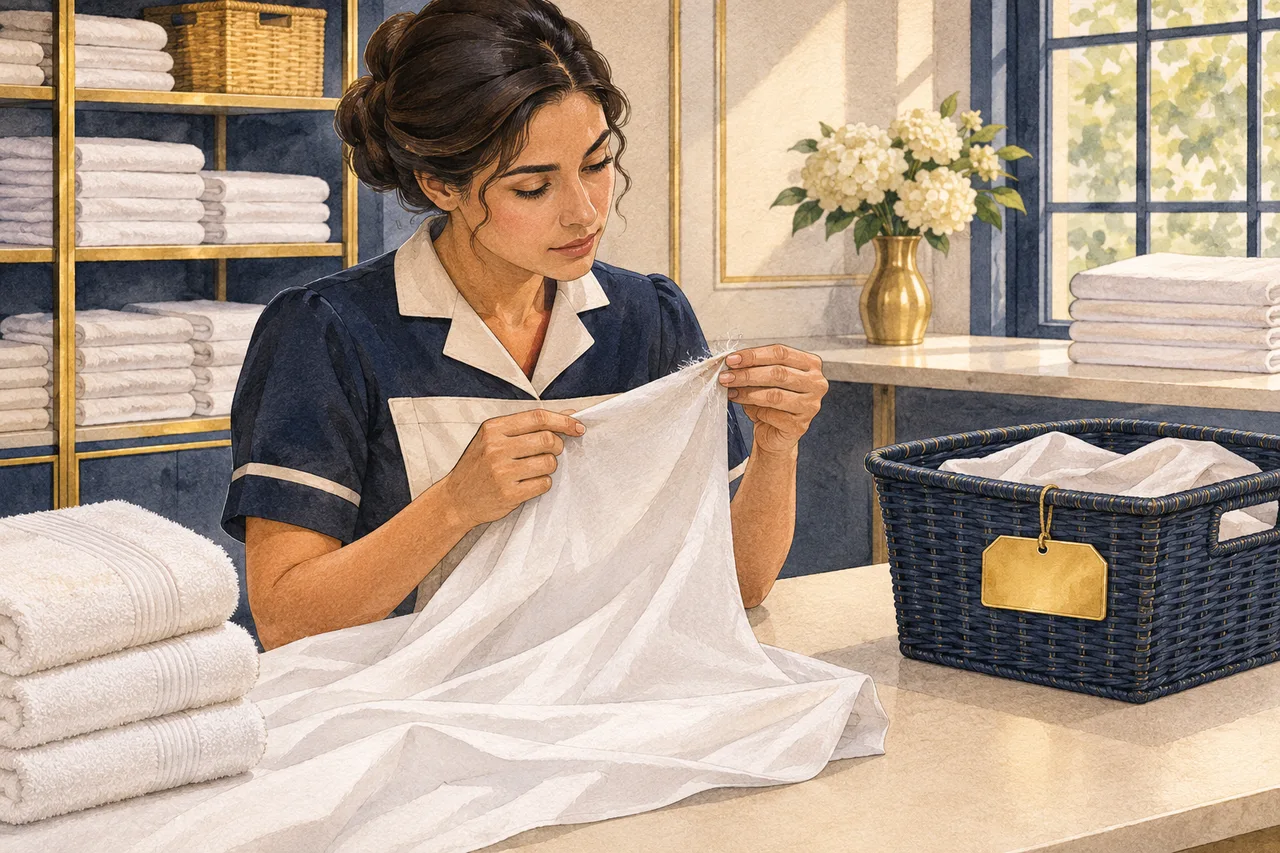
A room attendant is making a bed and spots a frayed edge on a clean sheet. During the same shift, another attendant finds a stain on a used bath towel. Both pieces need review, but their first stops are different. Use a replacement that has passed inspection for the room, then record where the rejected item went so the next shift can account for it.
Take the piece out of guest circulation
Check items when clean laundry arrives, when you stock a trolley and as you lay out bedding or towels. Look at the seams, hems and exposed surfaces in good light. If a piece has a tear, a visibly thinned patch or a stain, keep it off guest shelves and trolleys. Textile manufacturer Oya Textile recommends inspection during room turnover and before items go back into circulation, with thinning, seam failure and discoloration among the things to look for. Oya Textile commercial care guide
If you suspect contamination that requires special handling, notify the supervisor and follow the hotel’s special-handling procedure before sorting the item further.
Put clean rejects in a designated, labelled container away from both usable clean stock and used laundry. Route any item found in used laundry through the hotel’s soiled-linen procedure, and flag the defect for the laundry team using its agreed label or bag. Keep it on that route even if the damaged area looks dry.
Label the observation and count the pieces
Record item type, size where relevant, quantity, time and shift, where you found it, and the name of the person receiving it. Use the delivery reference if the defect shows up in a laundry return. Write “double sheet, frayed at one corner” or “bath towel, brown mark in the centre.” Keep guest names off the container label. Use the marking method agreed with the laundry so the tag can be removed without damaging the fabric.
Count individual pieces by category. If one towel is both stained and worn, give it one line with both observations and count it once. The person handing over and the person receiving should check the quantities against the same entry. When a defect keeps appearing on the same size or in the same batch, record the pattern for follow-up.
Have the supervisor and laundry team agree the outcome
The supervisor can review the piece with the laundry lead and apply the hotel’s standard for guest rooms. Commercial laundry operator Blue Star Linen describes documenting residual stains for further attention and classifying items with permanent stains, fabric damage or advanced wear for discard. Those are examples from its own operation. Blue Star Linen sorting and inspection process
| What the team observes | What to do next |
|---|---|
| A mark remains on otherwise sound fabric | Ask the laundry team to assess whether approved reprocessing is suitable. |
| A seam has opened and the surrounding fabric looks sound | Refer for authorised repair if the hotel permits it for that item. |
| The fabric is weak, badly torn or still below the room standard after assessment | Keep it out of circulation and request approval to retire it. |
Keep items awaiting a decision on the pending list. Check cleanliness, dryness, appearance and condition before the supervisor releases a rewashed or repaired piece. When a contractor is involved, confirm how it identifies rejects and reports their outcome. In-house and outsourced hotel laundry guide
Reconcile the count at shift handover
In a hypothetical hotel, the morning trolley holds 12 bath towels and eight double sheets. An attendant removes two clean towels with marks and one sheet with a frayed hem. The ready count drops to 10 towels and seven sheets. Later, the supervisor accepts one towel after rewash and approves the other for retirement. With no other movements, there are now 11 ready towels and seven ready sheets. The retired towel leaves the active inventory, and the sheet stays pending for assessment at the next shift.
- Match each approved return, write-off and pending item to the original entry.
- Record the date, quantity and approver, and tell the next shift who will follow up on outstanding pieces.
- Check ready quantities by item and size before planning upcoming room changes. Hotel linen stock guide
Frequently asked questions
Can a clean rejected item go into the used-linen bag?
Keep it in the designated clean-reject container so the person inspecting it can find it and decide where it goes next.
When can a repaired sheet go back on the shelf?
Return it after inspection confirms it meets the hotel’s guest-room standard and the supervisor approves its release.
Is a stain enough to bill the guest?
A stain shows the condition of the item when it was found. Establish the facts before attributing damage to a guest, and refer any proposed charge to management under the hotel’s applicable procedure.
These guides are published by BirOtel. General methods, illustrative examples and current product capabilities are identified separately. Sources appear beside the relevant explanations.
[email protected]Explore these workflows for your own hotel
Use your room inventory and daily tasks to assess whether BirOtel fits your hotel in a live demo.