
Guest experience
Hotel pet stays: what to confirm before taking the booking
A practical prebooking pet policy checklist for hotels: suitable rooms, fees, shared areas, housekeeping arrangements and a clear written guest confirmation.
The short answer
Before accepting a pet stay, check the property's actual rules and room availability for every night. Confirm the animal details, total charges and charging basis, permitted areas, supervision and cleaning arrangements in writing. Keep assistance-animal requests on a separate review path under the applicable rules.
A guest asks, “Can I bring my dog?” Reception replies yes, but only at arrival mentions an extra charge and says the dog cannot enter the breakfast area. The booking may be valid, yet the stay begins with a disagreement that clearer information could have prevented.
For a small hotel in Azerbaijan, “pet friendly” should describe an arrangement the team can deliver. This guide proposes a prebooking information workflow. It does not assume that every hotel accepts pets or that BirOtel supplies a dedicated pet-management module.
Replace a general promise with specific conditions
Start with the hotel’s approved written policy. Reception should know who can authorise an exception, where the current version is kept and which room categories are eligible. A general enquiry is not approval for a particular animal on particular dates.
One official example shows the value of precision: Hilton Arlington’s property information specifies a pet limit and a fee charged per pet, per stay. These are that property’s conditions, not a price benchmark or a policy to copy into an Azerbaijani hotel.
Publish the essentials where the guest books and repeat them in the written response. If an intermediary’s listing differs from the property’s current information, resolve the discrepancy before requesting confirmation. Do not leave the guest to discover which description applies after paying.
Ask only what is needed to assess the request
Use a short checklist that can be completed by phone or message:
| Point to confirm | What reception should record |
|---|---|
| Dates and room category | Suitable availability across the whole stay |
| Animal details | Species, number and size where relevant to actual rules |
| Charges | Amount, currency, per pet or room, per night or stay |
| Refundable security | Separate amount, return conditions and expected process, if used |
| Shared areas | Where the pet may accompany the guest |
| Supervision and cleaning | Agreed room-service access and contact arrangement |
| Approval | Responsible employee, written confirmation and policy version |
Do not collect unrelated personal information. If the request concerns an assistance animal, route it to the authorised manager to assess under the applicable rules. Do not automatically apply ordinary pet restrictions or fees. This article does not determine legal eligibility or import another country’s rules.
Check the room for the complete stay
An eligible room available on arrival may be unavailable on the second night. Check all requested dates before saying yes. Keep the confirmed arrangement attached to the booking in the hotel’s established records so another shift can find it.
Ask whether the guest plans to leave the animal alone. Explain the property’s actual supervision rule without improvising a promise of pet sitting. If pets may not be left unattended, say so before the guest commits and clarify how this affects dining or excursions.
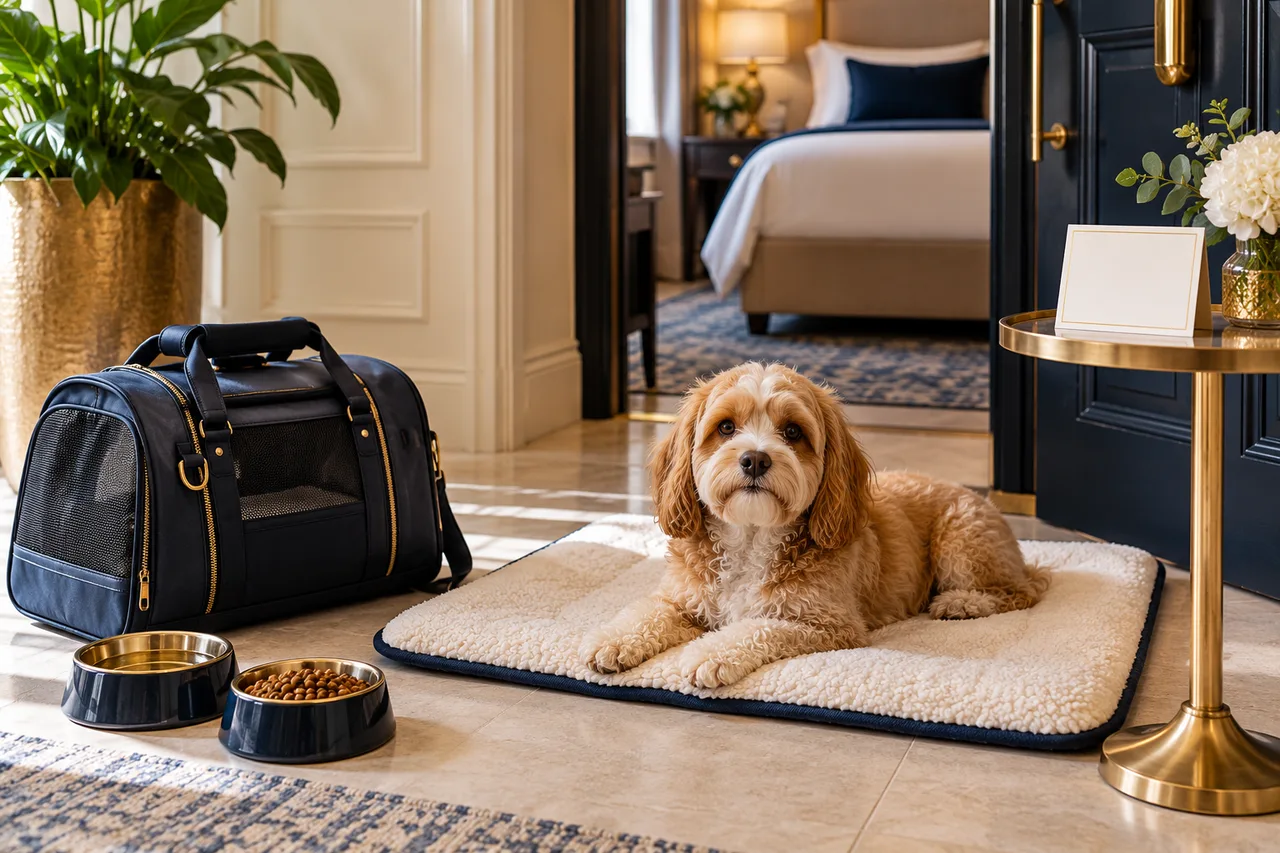
Do not promise a pet bed, bowls, an outdoor area or specialist cleaning unless the property can supply them. For regional guesthouses, describe the real walking route or outdoor space rather than using a vague “large garden” claim. Any information about third-party services should be checked before being passed on.
Explain the price without ambiguous labels
A non-refundable service fee and a refundable security deposit are different things. State each separately, explain the charging unit and show the total payable. Avoid calling every amount a deposit.
Consider an explicitly hypothetical quote: three room nights at 100 AZN each, plus one 30 AZN pet fee for the entire stay, total 330 AZN. For this example, all applicable charges are already included and there is no refundable security amount. The figures illustrate wording only; they are not market prices or a recommended tariff.
If the real property’s fee is per night, or changes with the number of animals, calculate the real total instead. Explain separately any possible damage assessment under the agreed conditions; do not present an undefined future charge as part of a fixed quote.
Agree a cleaning arrangement before arrival
Housekeeping should not open a room without knowing that an animal is present. Agree a service window when the guest can take the animal out or follow another arrangement approved by the property. Share only the operational details the relevant team needs.
Add the arrangement to the pre-arrival checklist. If access cannot proceed as agreed, contact the guest and supervisor, record the revised plan and avoid unsafe improvisation. Reception should also know how to respond if another guest reports noise or a problem in a shared area.
This is a coordination task, not an instruction for employees to handle, restrain or care for an unfamiliar animal. Assign those responsibilities only where the property actually offers an appropriate service.
A confirmation message the hotel can adapt
The following original template belongs inside the hotel’s normal booking confirmation, after the details have been checked:
We confirm that [animal details] can stay in [room category] from [arrival] to [departure]. The accommodation total is [amount]; the pet charge is [amount and charging basis]; any refundable security is [amount and conditions]. Pets may use [areas]. The supervision rule is [rule]. Room cleaning is arranged for [window and conditions]. Please tell us before arrival if these details change.
Fill every relevant field and remove unused ones. A guest’s acknowledgement helps establish that the information was received; it does not cure unclear or conflicting terms. Do not send a final acceptance while suitable room availability or an exception remains unresolved.
Frequently asked questions
Is a pet-friendly label enough?
No. It does not tell the guest which animals are accepted, whether a suitable room is available, what the charge covers or where the pet can go. Put those practical details beside the label and in the confirmation.
Can reception promise an exception?
Only within its actual authority. Record the request, seek the designated manager’s decision and give a clear response before accepting the specific arrangement. A casual verbal exception should not become an undocumented promise.
What if the guest changes the animal details?
Recheck the request against the room allocation and current agreed policy. Explain any effect on availability or price before updating the confirmation. If the request concerns an assistance animal, use the separate authorised review process rather than treating it as a routine pet change.
These guides are published by BirOtel. General methods, illustrative examples and current product capabilities are identified separately. Sources appear beside the relevant explanations.
[email protected]Explore these workflows for your own hotel
Use your room inventory and daily tasks to assess whether BirOtel fits your hotel in a live demo.