
Hotel operations
Hotel room too hot or cold: responding to a comfort complaint
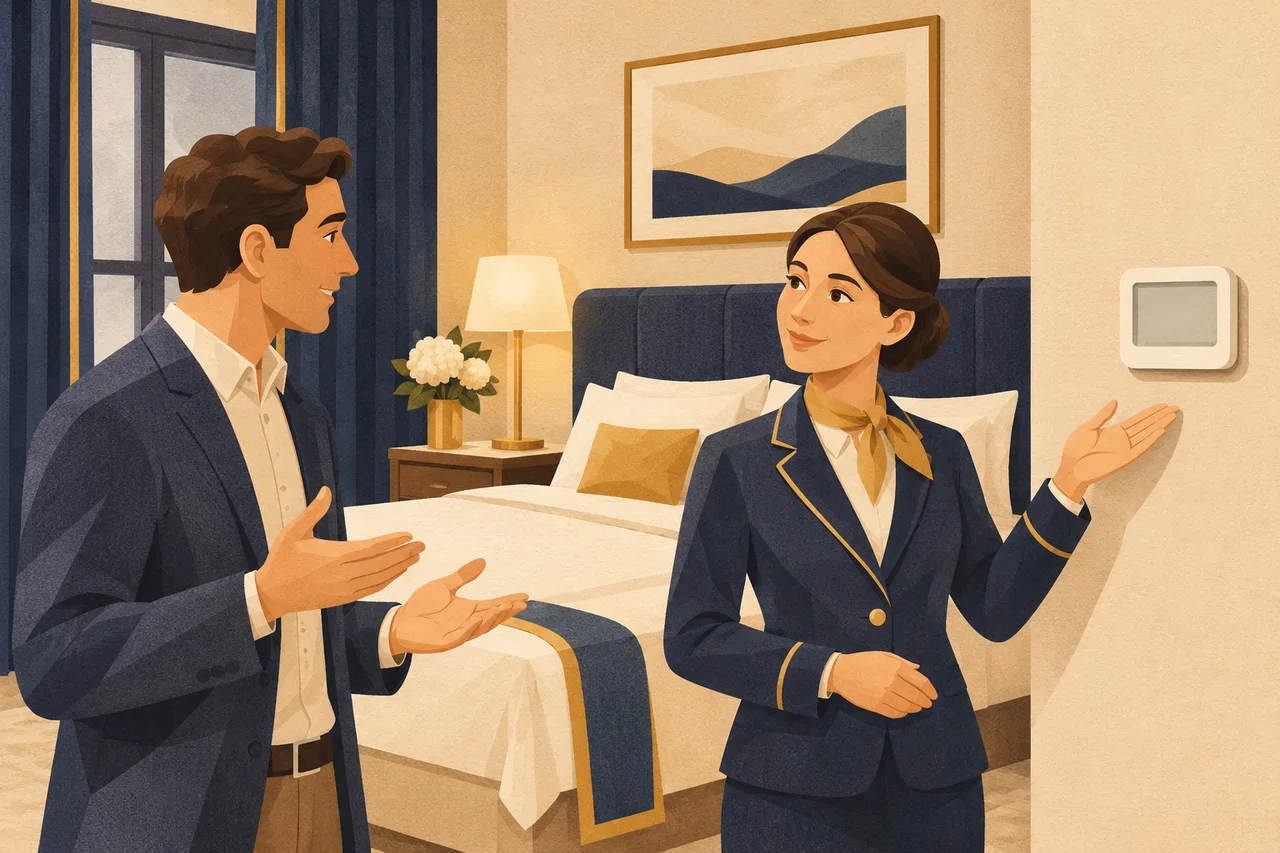
A reception workflow for room temperature complaints: clarify the discomfort, explain approved controls, arrange access and verify the guest is comfortable.
The short answer
Ask what feels uncomfortable, distinguish the displayed room temperature from the selected setting, and check when the problem began. Explain only the controls approved in the property's instructions. Agree access and a callback with a named owner, involve a technician for suspected faults, and confirm comfort or an agreed alternative with the guest.
A guest saying “the room is freezing” needs a practical response, not an argument about the thermostat. A working system can still leave someone uncomfortable, while a familiar display can hide a fault. Reception’s task is to understand the experience, arrange an appropriate response and check that the guest can comfortably continue their stay.
This is a comfort complaint workflow. Technical investigation belongs with qualified staff; detailed fault documentation follows the maintenance reporting process.
Clarify the discomfort before changing anything
Ask whether the room feels too hot, too cold, stuffy or affected by a direct draught. Establish when the discomfort started, whether it is continuous and what the guest would prefer. Ask what they have already changed so the next colleague does not repeat an unsuccessful instruction.
Distinguish the current temperature, if the display provides it, from the selected target. Record the time and source of a reading; a selected number alone does not establish the room’s actual condition. If the display is unclear, record that uncertainty instead of interpreting an unfamiliar symbol.
There is no single ideal temperature for every guest. Do not dismiss a complaint because a number looks normal. Record the practical impact, such as interrupted sleep, without requesting unnecessary medical details.
Explain this property’s controls
Use the hotel’s current room guide and instructions for that equipment. Explain only normal controls intended for guests, including any documented operating limitations. Do not improvise button combinations, service menus or electrical resets. Suspected faults require a technician.
Property arrangements differ. Golden Hotels’ FAQ says an open terrace or balcony door stops its air conditioning. Toyama Excel Hotel Tokyu’s facility guide describes centrally managed seasonal heating, cooling and ventilation, with guestroom windows that cannot be opened. These illustrate specific properties, not instructions for every hotel.
Never bypass window security, door sensors or other protective controls. Reports of smoke, burning smells, leaks or other possible hazards follow the property’s emergency procedure immediately; routine comfort troubleshooting must not delay that response.
Turn the conversation into a service agreement
The following original worksheet keeps the guest’s needs visible alongside the next action. It can be maintained manually using the hotel’s approved record.
| Question | Useful record | Next decision |
|---|---|---|
| What feels wrong? | Guest’s words, time and effect on rest | Urgency and preferred outcome |
| What does the display show? | Current reading and target, clearly distinguished | Approved explanation or technical visit |
| What has already been tried? | Normal controls used and observed result | Avoid repeating ineffective advice |
| When may staff attend? | Permission, visit window and presence preference | Arrange access within those conditions |
| Who follows up? | Named owner, contact method and callback time | Confirm result or arrange another step |
Agree room entry explicitly, including whether the guest will be present. A complaint does not grant unrestricted access. The coordinator confirms that the attending colleague accepted the visit and its conditions.
Promise a realistic update time, not an unverified repair deadline. If the shift changes, name the colleague accepting the follow-up. Do not leave the guest to chase separate departments.
A hypothetical response and follow-up
Training example: at 21:10 a guest reports a warm bedroom despite lowering the target setting. Reception records the displayed values separately and learns that the guest wants to sleep soon. No warning signs are reported.
“I understand the room still feels too warm. Aylin will coordinate this. May our technician visit between 21:20 and 21:35 while you are present? We will call you at 21:40 with an update and check whether the room feels comfortable.”
These times illustrate an agreement, not a hotel service standard. After the visit, Aylin verifies what was checked and calls as agreed. “Work completed” does not answer whether the guest can sleep comfortably.
If discomfort continues, discuss available alternatives. Before agreeing a move, check the destination’s comfort, readiness, suitability and availability for the remaining stay; clarify any price implications. Follow the room move checklist and obtain the guest’s agreement. An unchecked replacement room may repeat the problem.
Frequently asked questions
Should reception recommend a standard target temperature?
Ask the guest’s preference and follow documented equipment limits. A universal target neither establishes comfort nor proves the system is working.
What if there is no suitable alternative room?
Explain the verified availability honestly. Agree any property-approved temporary comfort arrangement, keep the responsible manager informed and set the next update; do not promise unavailable accommodation.
Can the complaint close after the technician leaves?
Confirm the guest’s comfort or acceptance of the agreed alternative. If the callback is unanswered, record the attempt and keep follow-up pending under the property’s procedure.
These guides are published by BirOtel. General methods, illustrative examples and current product capabilities are identified separately. Sources appear beside the relevant explanations.
[email protected]Explore these workflows for your own hotel
Use your room inventory and daily tasks to assess whether BirOtel fits your hotel in a live demo.